 Felix Kumuyi
Adigun Led KLT Customs Hits a Landmark ₦19.4bn Revenue Mark, Impounds 182,340 Expired Vapes from Nigerian Market

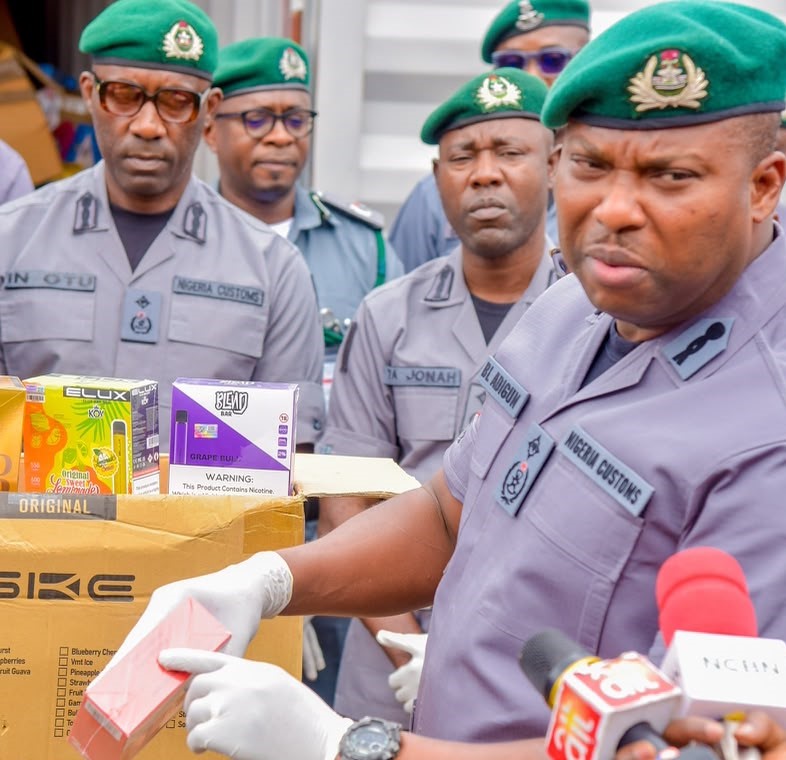
DC Bolaji Adigun, Ag. CAC, KLT Command, NCS, Addressing Journalists during the press briefing
The Nigeria Customs Service, Kirikiri Lighter Terminal Area Command, has announced a whopping 35 per cent increase in its June revenue collection while preventing more than 182,000 pieces of expired disposable vape products from entering the Nigerian market.
The Command generated ₦19.4 billion in June 2026, up from ₦14.36 billion recorded in June 2025, even as its enforcement officers intercepted a 40-foot container containing expired disposable vape products with a Duty Paid Value of ₦809.7 million.
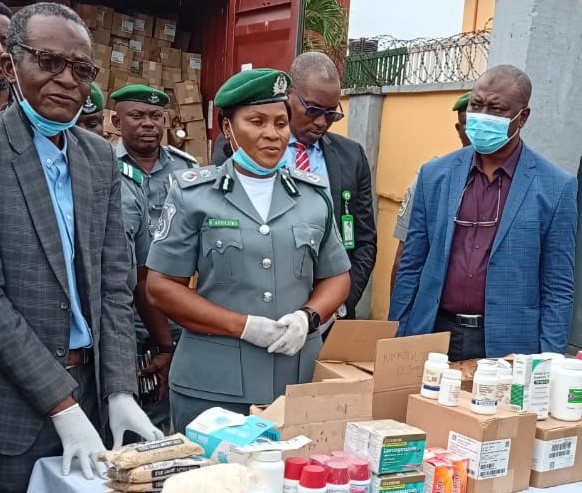
The seized Vapes drugs on display
The Acting Customs Area Controller, Deputy Comptroller Bolaji Lukman Adigun, announced the development during a media briefing held at the Command on Thursday, July 30.
Adigun said the Command collected exactly ₦19,404,925,103.53 in June 2026, representing an increase of ₦5,041,303,439.18 over the corresponding period of 2025.
He linked the growth to improved stakeholder compliance, enhanced trade facilitation, the commitment of officers and the use of intelligence-led Customs strategies.
But the enforcement side of the Command’s mandate also produced a major result.
During examination of a 40-foot container numbered TIIU4739360, Customs officers discovered 18 pallets of disposable vape products.
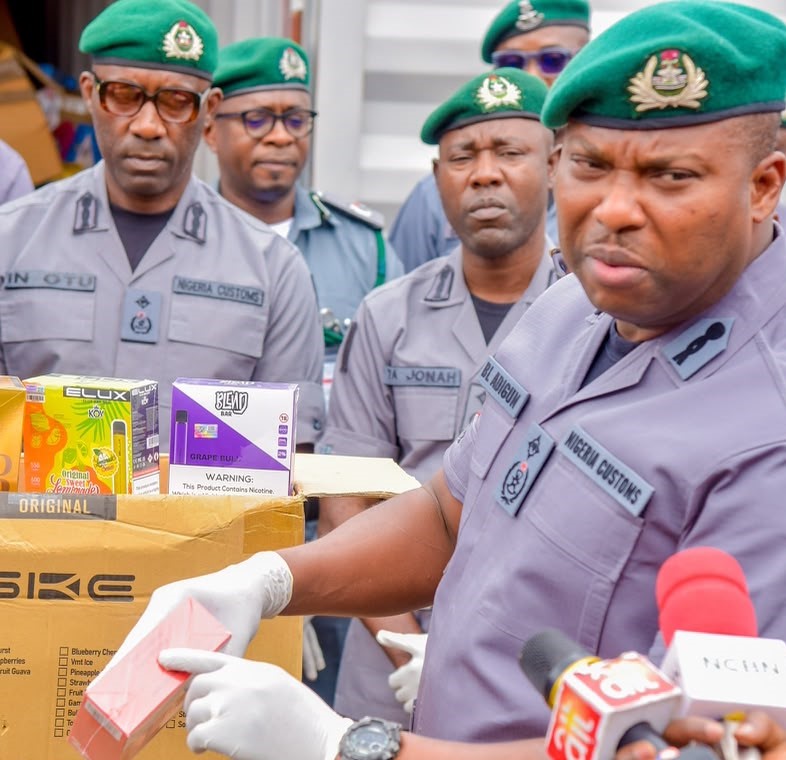
DC Adigun showcasing the seized expired drugs to the media
The examination revealed 484 cartons containing 182,340 pieces of the products. Some of the items had expiry dates dating as far back as 2022, with others expiring in 2023, 2024, 2025 and 2026.
The consignment, according to Customs, has a Duty Paid Value of ₦809,698,761.
The seized products were subsequently handed over to the National Agency for Food and Drug Administration and Control for further regulatory action.
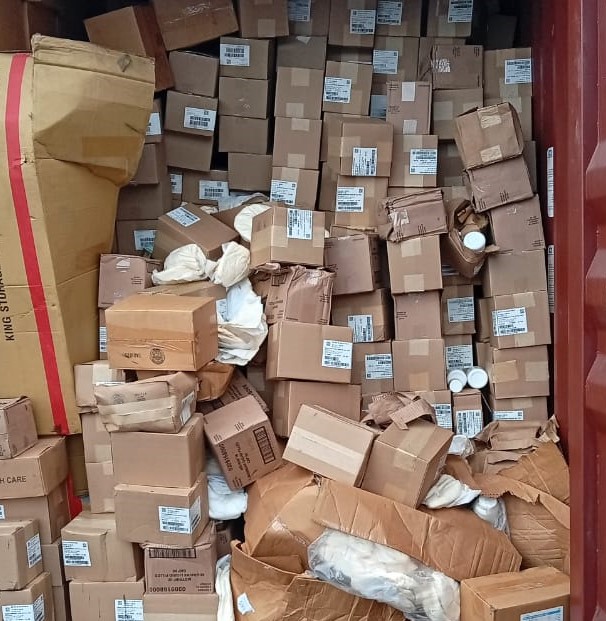
The Seized drugs in the container
Speaking during the handover, NAFDAC representative at the Kirikiri Lighter Terminal, Dr. Anzaku Peters of Port Health, described the collaboration with Customs as essential to protecting Nigerians.
Peters said both agencies were working towards the same objective of ensuring that only safe and properly regulated products enter the country.
He emphasised that public health remains central to NAFDAC’s regulatory responsibility.
“Our target is public health. Once we have public health, the sky is the limit,” he said.
While explaining NAFDAC’s position on the products, Peters noted that the presence of nicotine was not the principal concern in the particular seizure.
The critical issue, he said, was the importation of expired products.
“As NAFDAC, normally, we have this. It contains nicotine products. It’s not a problem. But the issue of bringing an expired product, some as far back as 2022, some as 2023 and 2024, is unwholesome and unworthy,” he said.
He explained that expired, unregistered, falsified and otherwise unwholesome products fall within the scope of NAFDAC’s regulatory enforcement.
The development underscores the importance of inter-agency cooperation at Nigeria’s ports, particularly where regulatory compliance and public safety are involved.
For Customs, the seizure is also a reminder that increased revenue collection does not diminish the need for strict enforcement.
Adigun said the Command would continue to combine trade facilitation with intelligence-driven enforcement, effective risk management and thorough cargo examination.
He urged importers and licensed Customs agents to comply with import regulations and make use of mechanisms such as the Authorized Economic Operator Programme and Advance Ruling system to improve predictability and compliance.
The Acting Controller commended the Comptroller-General of Customs, Bashir Adewale Adeniyi, and the NCS management team for their strategic leadership, while also applauding the Command’s officers and men for their professionalism.
He further appreciated terminal operators, importers, licensed Customs agents, compliant traders, sister agencies and the media for their respective contributions.
The latest development presents a clear picture of the dual responsibility confronting port authorities and regulators: keeping legitimate commerce moving while ensuring that expired, prohibited and non-compliant products do not find their way into Nigerian homes and businesses.


 admin